The Product Video Trend: How Everyday Items Become Online Income
Category: Technology & Digital Business
SEO Title: Product Videos: How to Make Money Online in 2026
Permalink: product-videos-make-money-online
Meta Description: Learn how product videos can generate online income through affiliate marketing, UGC, brand deals, and e-commerce, with practical tips for beginners.
Focus Keyword: Make money with product videos
Related Keywords: Product video marketing, UGC creator, affiliate marketing videos, earn money creating videos, product video trends.
The Product Video Trend: How Everyday Items Become Online Income
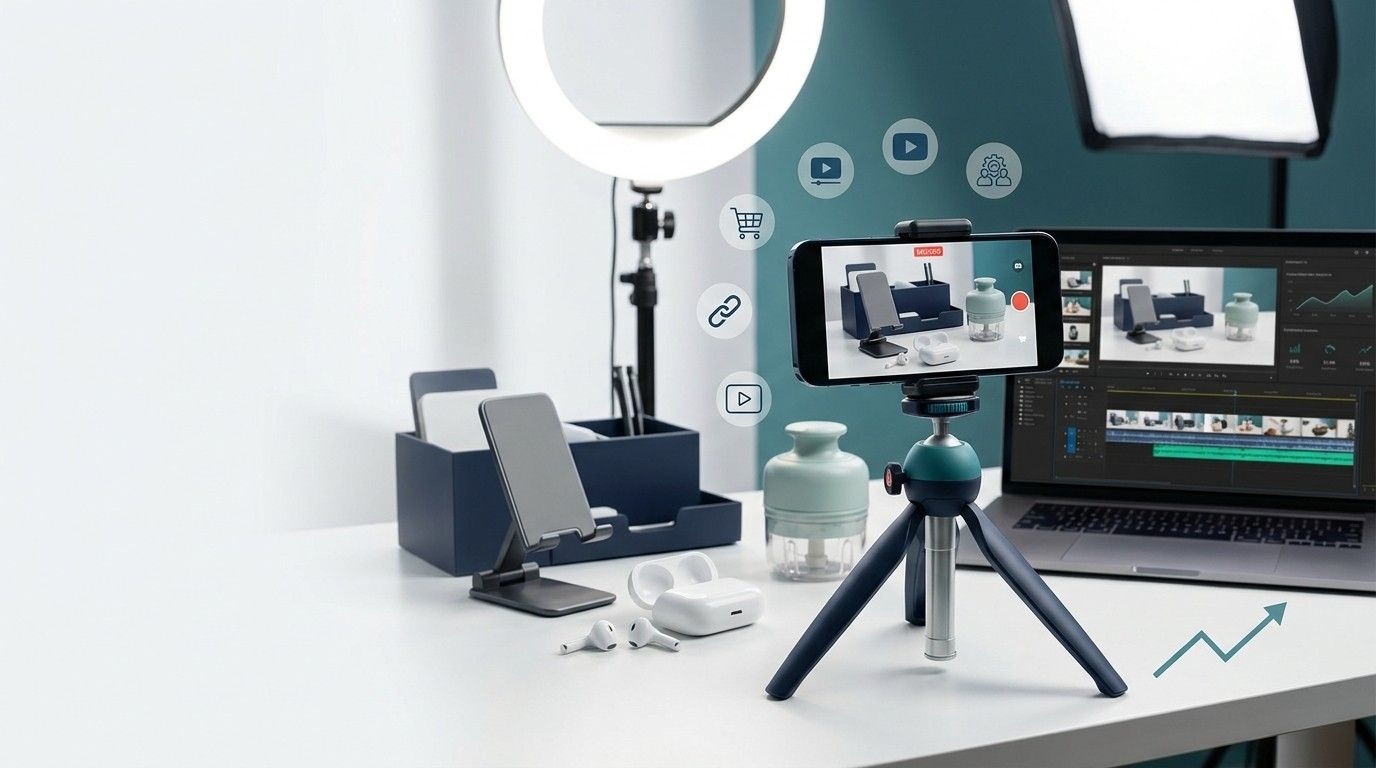
The Product Video Trend: How Everyday Items Become Online Income. Everyday products are becoming valuable content opportunities in the digital world. From kitchen accessories and smartphone gadgets to home organizers and desk equipment, simple items can become engaging videos that attract viewers and help creators explore different online income opportunities.
Product videos allow creators to demonstrate how an item works, explain its benefits, compare alternatives, and help potential customers make informed decisions. With a smartphone, basic editing skills, and a clear content strategy, beginners can start creating product-focused videos without investing in expensive equipment.
But how do these videos generate income, and what does it take to turn ordinary products into a potential online business?
This guide explains how product videos work, the main monetization methods, and practical steps beginners can follow.
What Are Product Videos?
Product videos are short or long videos that showcase an item’s features, demonstrate its use, or help viewers understand whether it meets their needs.
Common examples include:
- Unboxing videos that show what comes inside a package.
- Product demonstrations explaining how an item works.
- Honest reviews highlighting advantages and limitations.
- Comparison videos examining different products.
- Tutorials showing how to set up or use an item.
- User-generated content created for a brand’s marketing campaigns.
These videos can appear on social media platforms, video-sharing websites, online stores, and product pages.
Unlike a simple photograph, a video can demonstrate movement, setup, size, and real-world use. This makes product videos useful for audiences researching products before making a purchase.
Why Everyday Products Can Attract Online Attention
Not every successful product video needs an expensive gadget or a luxury item. Everyday products can be interesting when they solve a recognizable problem.
For example, a creator might demonstrate how a desk organizer reduces clutter, how a phone stand improves a workspace, or how a kitchen tool makes a particular task easier.
Several factors can make these videos useful:
Practical demonstrations: Viewers can see how an item works rather than relying entirely on written descriptions.
Problem-solving content: Videos can answer common questions about setup, compatibility, maintenance, and everyday use.
Searchable topics: People frequently look for product reviews, comparisons, tutorials, and buying advice.
Multiple content opportunities: One product may support several genuinely different videos, including an unboxing, setup guide, comparison, and long-term review.
The key is to provide useful information instead of simply promoting an item.
Five Ways to Make Money With Product Videos
1. Affiliate Marketing
Affiliate marketing allows creators to share special tracking links to products. When viewers make qualifying purchases through those links, the creator may receive a commission according to the affiliate program’s terms.
For example, a creator could publish a video demonstrating a smartphone accessory and include a link to the exact product.
Useful affiliate videos should explain the item’s features, compatibility, limitations, and potential benefits. Creators should also disclose affiliate relationships clearly.
Income is not guaranteed and depends on factors such as audience relevance, purchases, commission rates, and program conditions.
2. Creating User-Generated Content for Brands
User-generated content, commonly called UGC, includes product videos created for businesses to use in their marketing.
Brands may hire creators to produce demonstrations, unboxing clips, tutorials, or short advertising videos. A large personal following is not always necessary because some UGC projects focus primarily on production quality and the ability to communicate a product’s value.
Beginners can build a small portfolio using products they already own. Before accepting paid work, they should agree on deliverables, payment, deadlines, revisions, and content usage rights.
3. Sponsored Product Videos
Companies sometimes pay creators to feature products in videos. These arrangements may involve a fixed fee, gifted products, or other agreed compensation.
Creators can approach suitable brands with a clear portfolio and a proposal explaining the type of content they can produce.
Sponsored content should remain honest and clearly disclose relevant commercial relationships. Creators should never claim to have tested a product or achieved results they cannot substantiate.
4. Selling Products Through Online Stores
Businesses and independent sellers can use product videos to showcase their own merchandise.
A video might demonstrate product dimensions, explain how an item works, show what is included in the package, or answer common customer questions.
This approach can support e-commerce by giving potential customers a clearer understanding of a product before purchasing.
However, sellers must also consider inventory, shipping, customer service, returns, and other operating costs.
5. Video Platform Monetization
Some video platforms offer monetization programs, shopping features, or revenue-sharing opportunities for eligible creators.
Availability depends on the platform, account status, location, audience requirements, and current program policies.
Creators should review official eligibility rules before relying on platform monetization as an income source. Views alone do not guarantee earnings.
How to Create Your First Product Video
Beginners can start with a simple product they already own and understand.
Step 1: Choose a Useful Product
Select an item that solves a clear problem or has features worth demonstrating. Examples include desk accessories, storage organizers, kitchen tools, phone stands, and basic household gadgets.
Choose something you can explain honestly and film safely.
Step 2: Identify Your Audience’s Question
Every video should have a clear purpose.
Consider questions such as:
- How does this product work?
- Is it easy to set up?
- What features does it offer?
- What are its limitations?
- How does it compare with another option?
Answering one specific question can make a video more focused and useful.
Step 3: Write a Short Script
A simple product video can follow this structure:
- Hook: Introduce the problem or question.
- Demonstration: Show the product in action.
- Explanation: Describe relevant features and limitations.
- Conclusion: Explain who might find it useful.
- Call to action: Invite viewers to learn more or visit a relevant product page.
Keep the information accurate and avoid exaggerated claims.
Step 4: Record Clear Footage
A smartphone is often enough to get started. Use stable framing, good lighting, a clean background, and clear audio.
Record close-up shots of important features as well as wider shots that show the product’s size and context.
Natural lighting can work well for beginners who do not have dedicated filming equipment.
Step 5: Edit for Clarity
Remove unnecessary pauses, add captions when helpful, and make sure viewers can understand the demonstration.
Use music, images, and other assets only when you have the appropriate rights. Editing should improve clarity rather than hide product limitations.
Step 6: Publish With a Descriptive Title
Use a title that accurately reflects the video’s content.
For example, “How to Set Up an Adjustable Phone Stand” tells viewers more than a vague title such as “You Need This Amazing Gadget.”
Write a concise description and include relevant links where permitted.
Step 7: Review Performance
Track useful metrics such as audience retention, comments, link clicks, inquiries, and qualifying purchases.
Use this information to identify what viewers find helpful and improve future videos. Avoid judging the entire strategy by the performance of a single post.
Equipment Needed to Start
You do not need a professional studio to test your first product-video idea.
Basic equipment may include:
- A smartphone capable of recording clear video.
- A tripod or stable surface.
- Natural light or a suitable light source.
- A quiet recording environment.
- Video-editing software.
- A simple script and shot list.
Start with the tools you already have. Consider upgrading only when you identify a specific limitation that affects your results.
How to Improve Product Video Reach
Creating a video is only one part of the process. The content must also be useful to the intended audience.
Answer specific questions. Create demonstrations, tutorials, and comparisons based on genuine viewer needs.
Show the product clearly. Use close-up footage and explain important details rather than relying entirely on promotional language.
Create related content. Publish different videos that provide additional information instead of repeatedly uploading nearly identical material.
Use relevant calls to action. Direct viewers to a useful resource, product page, or detailed explanation.
Measure meaningful results. Consider audience retention, engagement, qualified traffic, and conversions alongside views.
Maintain consistency. A realistic publishing schedule can help you improve your filming, editing, and communication skills over time.
No particular strategy guarantees viral reach or income.
Common Mistakes to Avoid
Beginners should avoid several common mistakes when creating product videos.
- Promising guaranteed income or unrealistic financial results.
- Promoting products without understanding their features.
- Hiding sponsorships or affiliate relationships.
- Copying another creator’s footage or content.
- Using misleading demonstrations or unsupported product claims.
- Purchasing expensive equipment before testing their ideas.
- Ignoring platform policies and copyright requirements.
- Depending entirely on one social platform for traffic.
Building trust is more valuable over the long term than making exaggerated promises to attract short-term attention.
Can Product Videos Become a Reliable Income Source?
Product videos can support several business models, but results vary significantly.
Affiliate creators need relevant traffic and qualifying purchases. UGC creators need clients who value their content. Online sellers need products that can be marketed profitably. Platform monetization depends on eligibility and program rules.
Beginners should start with a small portfolio, test different content ideas, and track production costs before making substantial investments.
Some creators may eventually develop paid client work or product-based income, while others may find that their videos generate little or no revenue.
There is no universal earning figure that applies to every creator.
Disclosure, Copyright, and Content Accuracy
Creators should disclose relevant paid partnerships, gifted products, and affiliate commissions where required. Disclosures should be clear and easy for viewers to notice.
Review the FTC’s guide to social media disclosures for practical examples, and check the laws applicable to your location and audience.
Use original footage or assets you have permission to use. Keep product descriptions accurate, and never fabricate testimonials, sales figures, product tests, or earnings claims.
Frequently Asked Questions
Can beginners make money with product videos?
Potentially. Beginners may explore affiliate marketing, UGC projects, brand partnerships, selling their own products, or eligible platform monetization. Success depends on the business model, content quality, audience, and other factors.
Can I create product videos without showing my face?
Yes. Hands-only demonstrations, close-up product shots, unboxing clips, and voice-over tutorials can all work without showing your face.
What products are suitable for beginner videos?
Everyday products such as desk accessories, organizers, phone stands, kitchen tools, and household gadgets can provide useful starting points. Choose an item you can demonstrate accurately.
How long should a product video be?
There is no universal ideal length. A short demonstration may answer a simple question, while a detailed comparison may require more time. Focus on answering the viewer’s question clearly.
How much can a beginner earn from product videos?
There is no guaranteed or universal amount. Some beginners earn nothing initially, while others may eventually secure clients, qualifying affiliate commissions, or product sales.
Do I need expensive equipment?
No. A smartphone, stable framing, good lighting, and clear audio can be enough to begin. Upgrade your equipment as your needs develop.
Are affiliate links allowed in product videos?
That depends on the platform and affiliate program. Review the applicable terms, use permitted links, and disclose commission relationships clearly.
Final Thoughts
The product video trend gives creators and businesses a practical way to explain everyday items, answer customer questions, and explore potential online income opportunities.
The strongest starting point is not expensive equipment or a promise of quick money. It is useful content that demonstrates products honestly, answers specific questions, and respects the audience.
Start small, develop your skills, measure meaningful results, and build a portfolio of original work. Over time, this approach can help you determine whether affiliate marketing, UGC, sponsorships, e-commerce, or platform monetization suits your goals.
Editorial note: This article is for general educational purposes. Income opportunities, platform availability, and monetization requirements can change. Verify current terms before relying on any service as a source of income.
Reviewed by JobsLeap Editorial Team
